Rabu, 26 Februari 2014

Phi Phi Island, Thailand.

     The Phi Phi Islands (Thai: หมู่เกาะพีพี, Thai pronunciation: [pʰīː pʰīː]) are located in Thailand, between the large island of Phuket and the western Strait of Malacca coast of the mainland. The islands are administratively part of Krabi province. Ko Phi Phi Don ("ko" (Thai: เกาะ) meaning "island" in the Thai language) is the largest island of the group, and is the most populated island of the group. although the beaches of the second largest island, Ko Phi Phi Lee (or "Ko Phi Phi Leh"), are visited by many people as well. The rest of the islands in the group, including Bida Nok, Bida Noi, and Bamboo Island (Ko Mai Phai), are not much more than large limestone rocks jutting out of the sea.

    Phi Phi Don was initially populated by Muslim fishermen during the late 1940s, and later became a coconut plantation. The Thai population of Phi Phi Don remains more than 80% Muslim. The actual population however, if counting laborers, especially from the north-east, from the mainland is much more Buddhist these days. The population is between 2,000 to 3,000 people (2013).
    The islands came to worldwide prominence when Ko Phi Phi Leh was used as a location for the 2000 British-American film The Beach. This attracted criticism, with claims that the film company had damaged the island's environment, since the producers bulldozed beach areas and planted palm trees to make it look like the book, an accusation the film's makers contest. The film's release was attributed to an increase in tourism to the islands. Phi Phi Leh also houses the 'Viking Cave', from which there is a thriving bird's nest soup industry.


      Ko Phi Phi was devastated by the Indian Ocean Tsunami of December 2004, when nearly all of the island's infrastructure was destroyed. As of 2010 most, but not all, of this has been restored.


GEOGRAPHY
        There are six islands in the group known as Phi Phi. They lie 50 km south-east of Phuket and are part of Hadnopparattara-Koh Phi Phi National Park which is home to an abundance of corals and marine life. There are limestone mountains with cliffs, caves and long white sandy beaches. The national park covers a total area of 242,437 Rai.
      Phi Phi Don and Phi Phi Le are the largest and most well-known islands. Phi Phi Don is 9.73 sqkm: 8 km in length and 3.5 km wide. Phi Phi Le is 2 sqkm. In Total the islands have a size of 12.25 km2.

HISTORY
     From archaeological discoveries, it is believed that the area was one of the oldest communities in Thailand, dating back to the prehistoric period. It is believed that this province may have taken its name from Krabi, which means sword. This may come from a legend that an ancient sword was unearthed prior to the city’s founding.
     The name Phi Phi (pronounced ‘pee pee’) originates from Malay, the original name for the islands were Pulau Api-Api (The Fiery Isle). The name refers to the Pokok Api-Api, which literary translated as the Fiery Tree (Grey Mangrove) which is commonly found throughout the Island. They were incorporated into the national park in 1983.

source: wikipedia.org

Jumat, 21 Februari 2014

Opening Ceremony Dewa Athena VI


     On Saturday, 15th February 2014 there was Opening Ceremony Dewa Athena VI at Lapangan Bali. The ceremony followed by the 10th and 11th grader of SMAN 3 Bandung.
      
     Me and my friends came to school first, because we knew that there was nobody at Lapangan Bali. We arrived at 8 o'clock. While we waited the ceremony to begin, some of my friends did their homework. I just cackle around with my other friends. Oh ya, I forgot to tell you. On that day, there was volcanic ashes from Kelud Mountain. So, we had to wear a mask. If we didn't wear it, we could have a lungs disease.
     
     At 8.30 a.m. all of us went to Lapangan Bali. There were a lot of people gather around. The student council told us to form a line. 30 minutes later, the ceremony began. It begins with a speech from the head of event division. Then continued with a speech from the head of the student council. And the last speech was from our headmaster, Mr. Encang. In his speech, he told us to keep this event to remember him, just in case if he retired or something. Then, after he finished the speech, he lighted up the torchlight. The Opening Ceremony is done.

     Before we started to play, Mr. Dudi kicked the ball for the symbolize that the Dewa Athena VI had begun. The event continued with football match, girls of #32016 vs girls of #32015. The match won by #32015. Well, #32016 may lose but in the next time we can defeat them.

      Well, that's all from me. Here's bonus picture:


DEWA ATHENA VI. UBI CONCORDIA, IBI VICTORIA.

Jumat, 31 Januari 2014

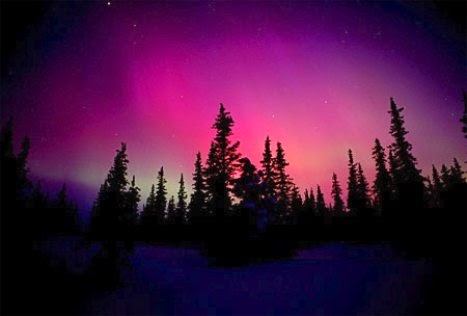
Aurora, a Natural Phenomenon


An aurora is a natural light display in the sky particularly in the high latitude (Arctic and Antarctic) regions, caused by the collision of energetic charged particles with atoms in the high altitude atmosphere (thermosphere). The charged particles originate in the magnetosphere and solar wind and, on Earth, are directed by the Earth's magnetic field into the atmosphere. Most aurorae occur in a band known as the auroral zone, which is typically 3° to 6° in latitudinal extent and at all local times or longitudes. The auroral zone is typically 10° to 20° from the magnetic pole defined by the axis of the Earth's magnetic dipole. During a geomagnetic storm, the auroral zone expands to lower latitudes.


Aurorae are classified as diffuse and discrete. The diffuse aurora is a featureless glow in the sky that may not be visible to the naked eye, even on a dark night. It defines the extent of the auroral zone. The discrete aurorae are sharply defined features within the diffuse aurora that vary in brightness from just barely visible to the naked eye, to bright enough to read a newspaper by at night. Discrete aurorae are usually seen in only the night sky, because they are not as bright as the sunlit sky. Aurorae occasionally occur poleward of the auroral zone as diffuse patches or arcs, which are generally subvisual.
In northern latitudes, the effect is known as the aurora borealis (or the northern lights), named after the Roman goddess of dawn, Aurora, and the Greek name for the north wind, Boreas, by Pierre Gassendi in 1621. Auroras seen near the magnetic pole may be high overhead, but from farther away, they illuminate the northern horizon as a greenish glow or sometimes a faint red, as if the Sun were rising from an unusual direction. Discrete aurorae often display magnetic field lines or curtain-like structures, and can change within seconds or glow unchanging for hours, most often in fluorescent green. The aurora borealis most often occurs near the equinoxes. The northern lights have had a number of names throughout history. The Cree call this phenomenon the "Dance of the Spirits". In Medieval Europe, the auroras were commonly believed to be a sign from God.


Its southern counterpart, the aurora australis (or the southern lights), has features that are almost identical to the aurora borealis and changes simultaneously with changes in the northern auroral zone. It is visible from high southern latitudes in Antarctica, South America, New Zealand, and Australia. Aurorae occur on other planets. Similar to the Earth's aurora, they are visible close to the planet's magnetic poles. Modern style guides recommend that the names of meteorological phenomena, such as aurora borealis, be uncapitalized.

Jumat, 24 Januari 2014

My Holiday

    Last holiday, I went to Kampung Gajah Wonderland with all of my family. We went there at 8.30 a.m. and arrived at about 9 a.m. When we got there, we bought the tickets. It was for me, my dad, my mom, and my brother.
    After we've got our tickets, we started to ride the arcade. First, we rode the 4D rider. It was a movie but in 4 dimension. But the movie was just 5 minutes long. After that, we rode the Buggy. It was like a car or something. It was so much fun. Then, we rode the skyrider, it was a flying fox. Some people said that it was the longest flying fox in the southeast Asia. We tried many more arcade, like tuby, go-kart, atv, etc.
    At 12.30, we had lunch. After we had lunch, we went to mushala to prayed. At 1.30 p.m. we went to Kampung Gajah Waterpark. It wasn't far, but we went there by the Kampung Gajah's car. We arrived at about 1.45 p.m.
    After we arrived, I changed my clothes into a swimsuit. Then, we went to Tornado. Tornado was a huge waterboom. We wanted to try it. At first, it was scary to death. I was screaming all the time. But when it was finished, I wanted to try it again. So, I tried it at about 7 times. Then I went to Octopus' slide. After that, we went to another pool. We went home at 5.30 p.m.
    At home, I reached my bed asap. Because I was exhausted. It was a very amazing experience I've ever had.

Selasa, 10 Desember 2013

Announcement

ANNOUNCEMENT

There will be an English speech contest for all students of SMAN 3 Bandung.

Day: Thursday, December 19th 2013.
Time: 10.00 a.m. - 14.30 p.m.
Place: SMAN 3's auditorium

Each class should give 1 person for the contest. The theme is about Independence day. 
The winner will receive 5.000.000 Rupiahs and a certificate. 
For further information, contact your English teacher.

Jumat, 06 Desember 2013

Summary and Moral Value of "Thumbelina"

SUMMARY
Once upon a time, there was a woman who wanted a baby. She always prayed, then a beautiful fairy heard her prayer and gave her a little seed in a flowerpot.
The seed bloomed into a tulip. Inside the tulip, there was a tiny beautiful girl. The woman called her, Thumbelina. She was so small that she had a walnut shell for a bed and used petals as a blanket.
Then, an ugly toad fell in love with Thumbelina, so he kidnapped her. Thumbelina was very unhappy. A swallow was passing by and saw how sad she looked, and said, “Come south with me to warmer lands.”
They flew across the seas and came to a land of sunshine. The swallow said, ” This is my home. You can live in one of the loveliest and biggest flowers.” When Thumbelina stepped inside, she found a handsome fairy, as tiny as her, in its heart.
The fairy was a prince, he asked her to marry him. So Thumbelina became queen of the flowers and the two lived happily ever after.

MORAL VALUE
1. Never give up, no matter what the cost.
2. Be happy with who you are. 

Selasa, 22 Oktober 2013

Narrative Text - Thumbelina


   Once upon a time, there was a kind woman who had no children, longed for a baby and would often say, “How I would love to have a baby girl, even a tiny little one.”
    A beautiful fairy heard her wish one day, and gave her a little seed to plant in a flowerpot.
   When the seed bloomed into a tulip, the woman saw a tiny, beautiful girl inside, no bigger than her thumb. She decided to call her Thumbelina. She was so small that she had a walnut shell for a bed and used petals as a blanket.
   Then, an ugly toad fell in love with Thumbelina. One night when she was sleeping, he carried her off to his lily pad in a pond. Thumbelina was very unhappy. A swallow was passing by and saw how sad she looked, and said, “Come south with me to warmer lands.”
   Young Thumbelina flew away on the swallow’s back. They flew across the seas and came to a land of sunshine. The swallow said, ” This is my home. You can live in one of the loveliest and biggest flowers.” When Thumbelina stepped inside, she found a handsome fairy, as tiny as her, in its heart.
   He was the son of the king of flowers and he fell in love with Thumbelina. He asked her to marry him. So Thumbelina became queen of the flowers and the two lived happily ever after.

source: Shortstoriesshort